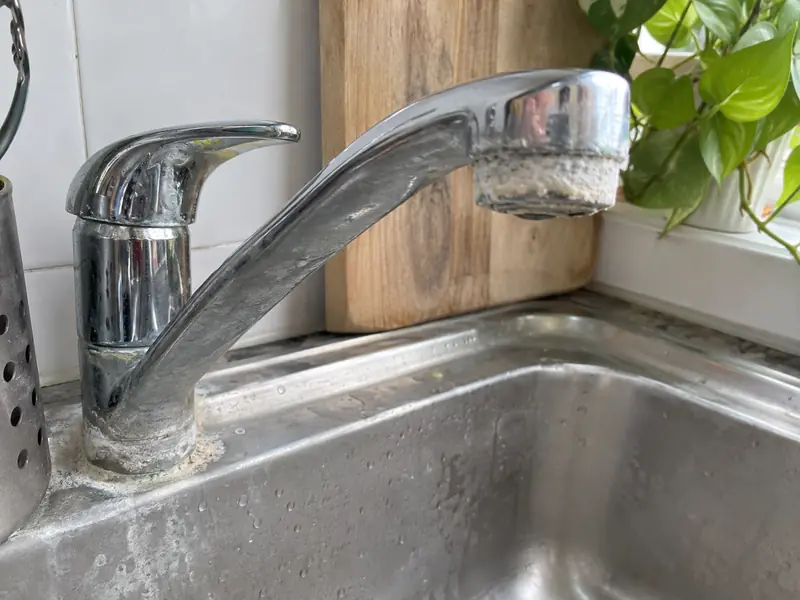
Hard water is water with a lot of dissolved calcium and magnesium, picked up as it moves through limestone, chalk and other minerals. Where your water comes from decides most of it. Mountain snowmelt and rain-fed reservoirs tend to be soft; groundwater and rivers that cross mineral-rich ground tend to be hard.
How hardness is measured
Labs and utilities report hardness in milligrams per liter as calcium carbonate (mg/L), sometimes written as parts per million (ppm), which is the same number. Softener makers and test strips often use grains per gallon (gpg), an older unit. One grain per gallon is 17.1 mg/L.
The hardness scale
The US Geological Survey uses four classes:
| Class | Rangemg/L | Rangegrains per gallon |
|---|---|---|
| Soft | 0 to 60 | 0.0 to 3.5 |
| Moderately hard | 61 to 120 | 3.6 to 7.0 |
| Hard | 121 to 180 | 7.1 to 10.5 |
| Very hard | over 180 | over 10.5 |
Hardness in the cities we cover
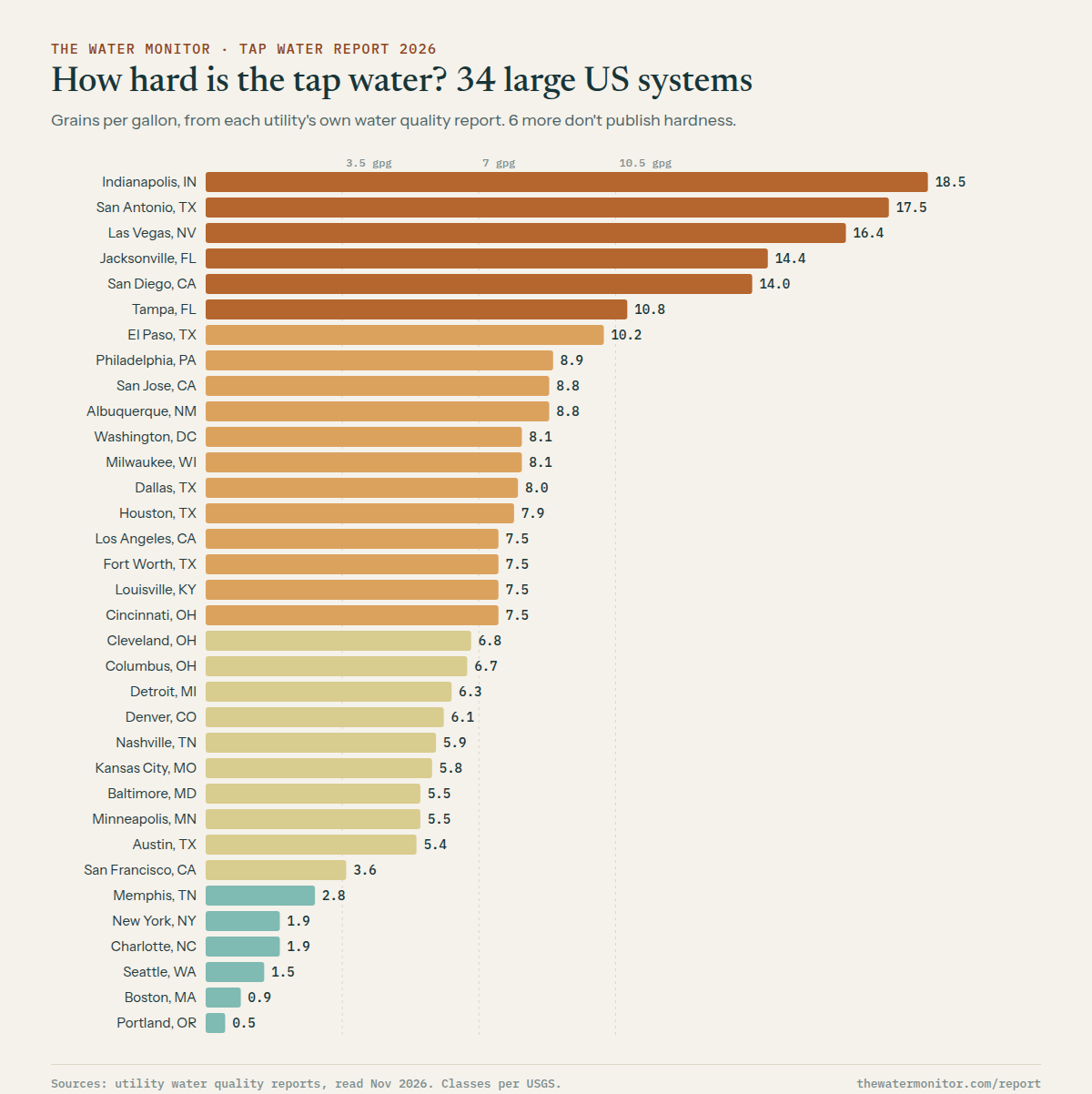
These come from each utility’s own published data, usually its annual water quality report, not a national estimate. Where a utility publishes a range, the outline shows it.
Hardness, by city
0 to 300 mg/L as calcium carbonate
- Indianapolis18.5
- San Antonio17.5
- Las Vegas16.4
- Jacksonville14.4
- San Diego14.0
- Tampa10.8
- El Paso10.2
- Philadelphia8.9
- Albuquerque8.8
- San Jose8.8
- Washington8.1
- Milwaukee8.1
- Dallas8.0
- Houston7.9
- Fort Worth7.5
- Los Angeles7.5
- Louisville7.5
- Cincinnati7.5
- Cleveland6.8
- Columbus6.7
- Detroit6.3
- Denver6.1
- Nashville5.9
- Kansas City5.8
- Baltimore5.5
- Minneapolis5.5
- Austin5.4
- San Francisco3.6
- Memphis2.8
- New York1.9
- Charlotte1.9
- Seattle1.5
- Boston0.9
- Portland0.5
What hardness does at home
Hardness has no health limit from the U.S. Environmental Protection Agency (EPA). Its costs show up around the house instead:
- Scale builds up inside water heaters, kettles and pipes, and on faucets and showerheads.
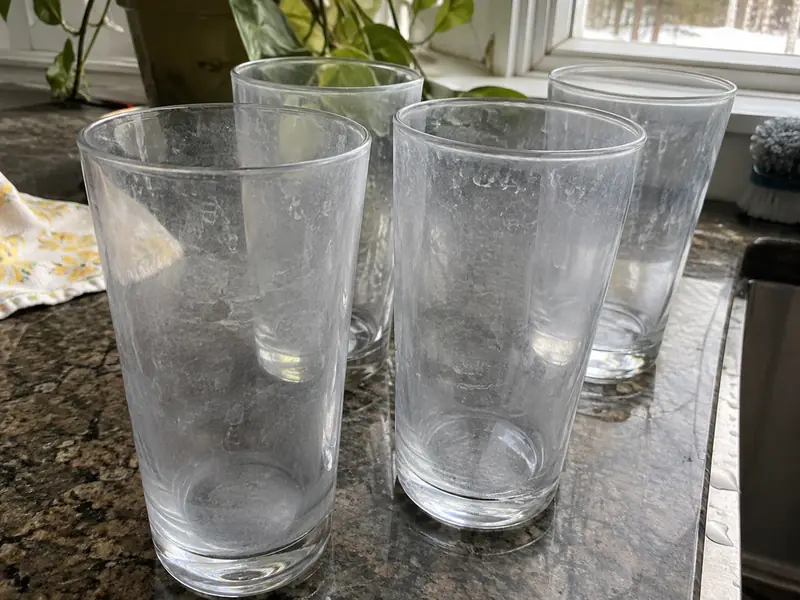
- Spots form on glasses and shower doors as water dries.
- Soap and detergent lather less, so you use more.
When a softener is worth it
No federal rule says when to soften. Minnesota’s health department gives a useful line: softening may be worth it above about 7 grains per gallon (120 mg/L), and isn’t needed if your water is already soft.
The harder the water, the more a softener does. In a lab study paid for by the water treatment industry, water heaters running on very hard water (over 180 mg/L) lost efficiency as scale built up, while heaters on softened water kept theirs (the studies). In soft water, a softener won’t help: you’d pay for the unit and the salt for nothing.
Where a softener goes
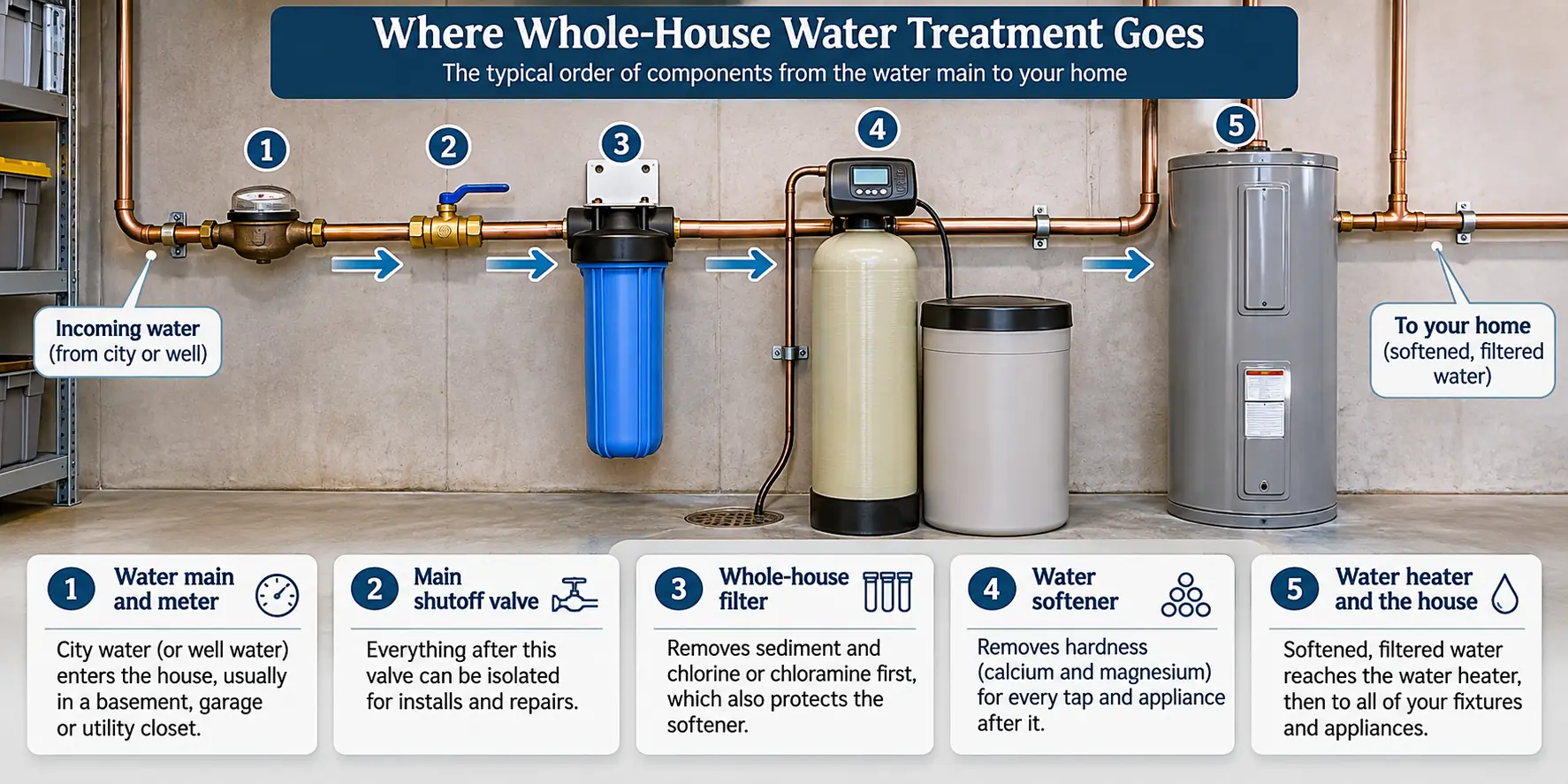
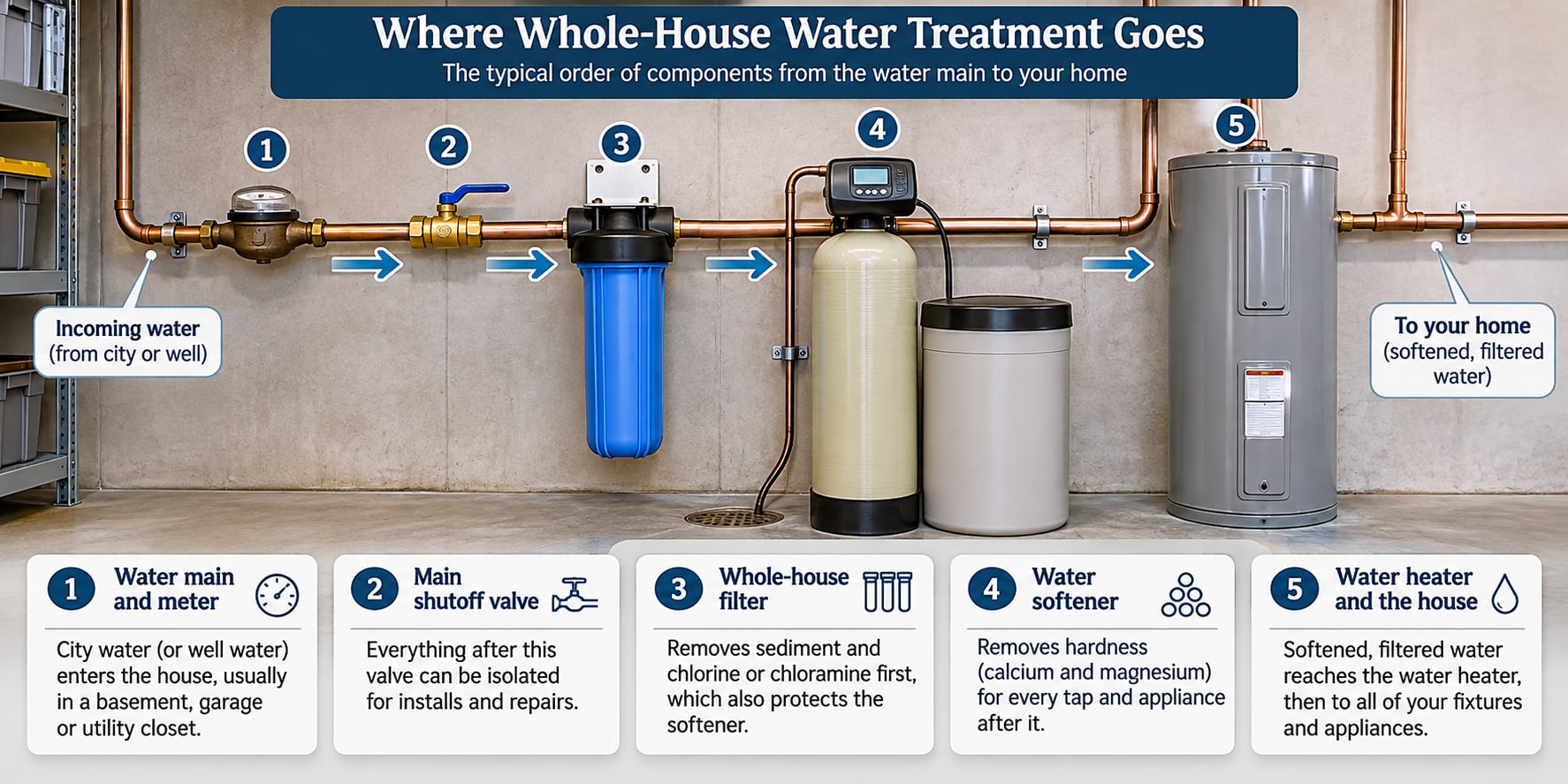
A softener treats the water for the whole house, so it goes on the main line where water comes in, usually in a garage, basement or utility closet. If you also have a whole-house filter, it goes first, because chlorine and chloramine wear out a softener’s resin over time.
Drinking water is a separate decision. A softener doesn’t remove PFAS (“forever chemicals”), lead or the chlorine taste. For those, people add a drinking water filter: an under-sink reverse osmosis system, or a carbon filter certified for what you want removed. It usually feeds its own faucet at the kitchen sink, and the same line can run to the refrigerator’s water dispenser and ice maker, or to more than one fridge.
A softener has to be sized to your water and household. Our sizing guide does the math with your city’s number.
Questions
My water report says mg/L, but softeners ask for grains per gallon. How do I convert?
Divide the milligrams per liter (mg/L) figure by 17.1. A report showing 171 mg/L means about 10 grains per gallon, which is the number a softener’s sizing chart asks for. To go the other way, multiply grains per gallon by 17.1.
Is hard water bad for you?
Hardness isn’t a health standard: the U.S. Environmental Protection Agency (EPA) has no limit for calcium or magnesium in drinking water. The costs are practical ones, like scale in water heaters and on fixtures, spotty dishes and more soap needed.
At what hardness do you need a water softener?
There’s no federal cutoff. Minnesota’s health department says softening may be warranted above about 7 grains per gallon (120 milligrams per liter (mg/L)) and isn’t needed for water that’s already soft (under 60 mg/L, about 3.5 grains per gallon (gpg), on the U.S. Geological Survey (USGS) scale).
Do filters remove hardness?
Carbon filters don’t. A water softener removes calcium and magnesium for the whole house. Reverse osmosis removes them too: an under-sink system treats the water going to its drinking faucet and anything else it’s plumbed to, such as a refrigerator’s water and ice line, and a whole-house reverse osmosis system treats every tap, starting around $6,795 in the brands’ own stores.