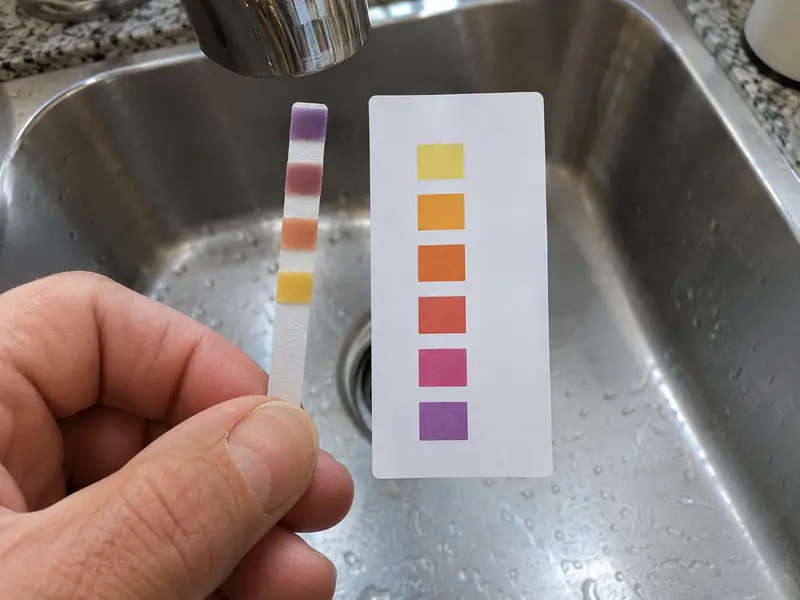
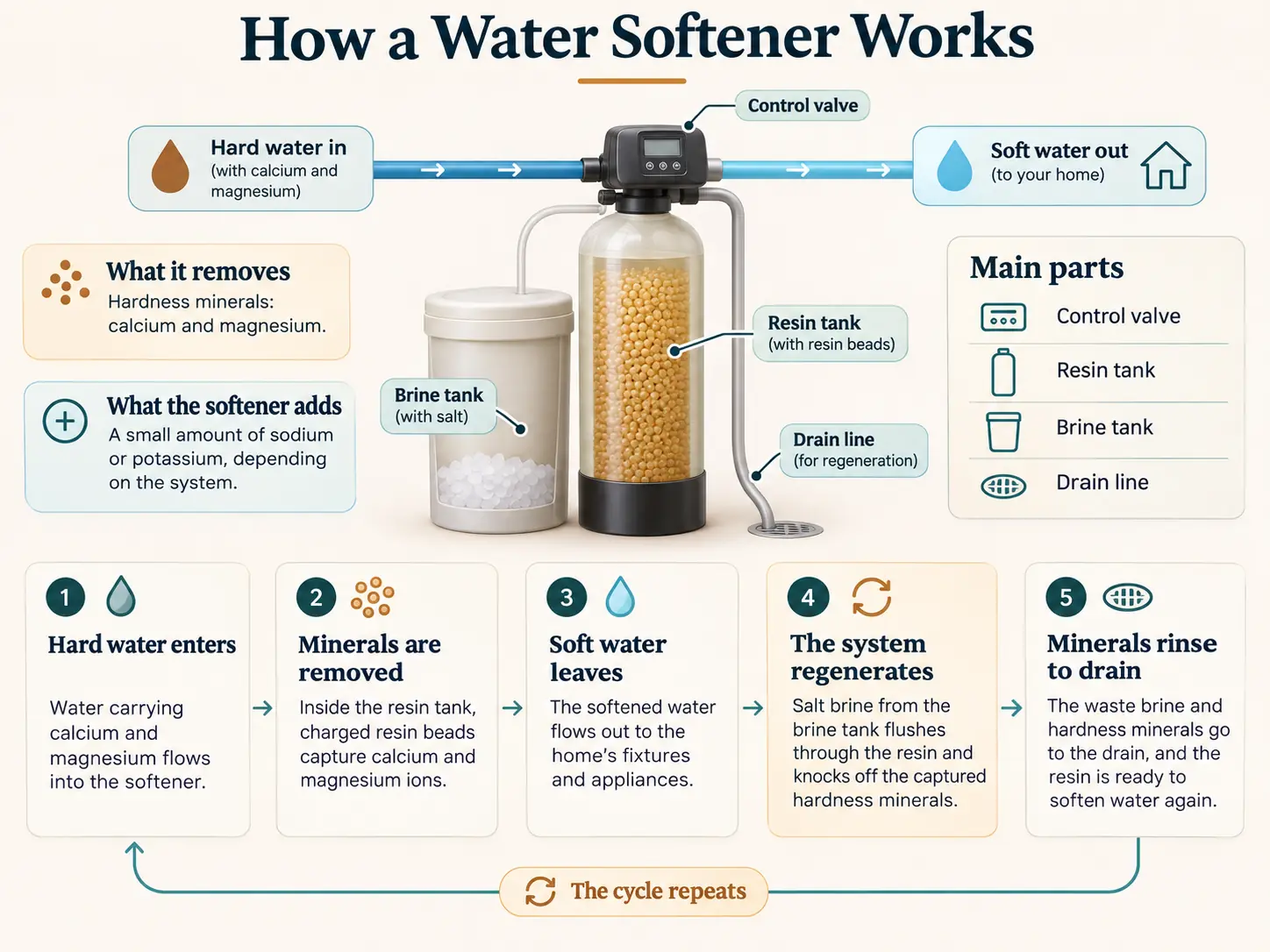
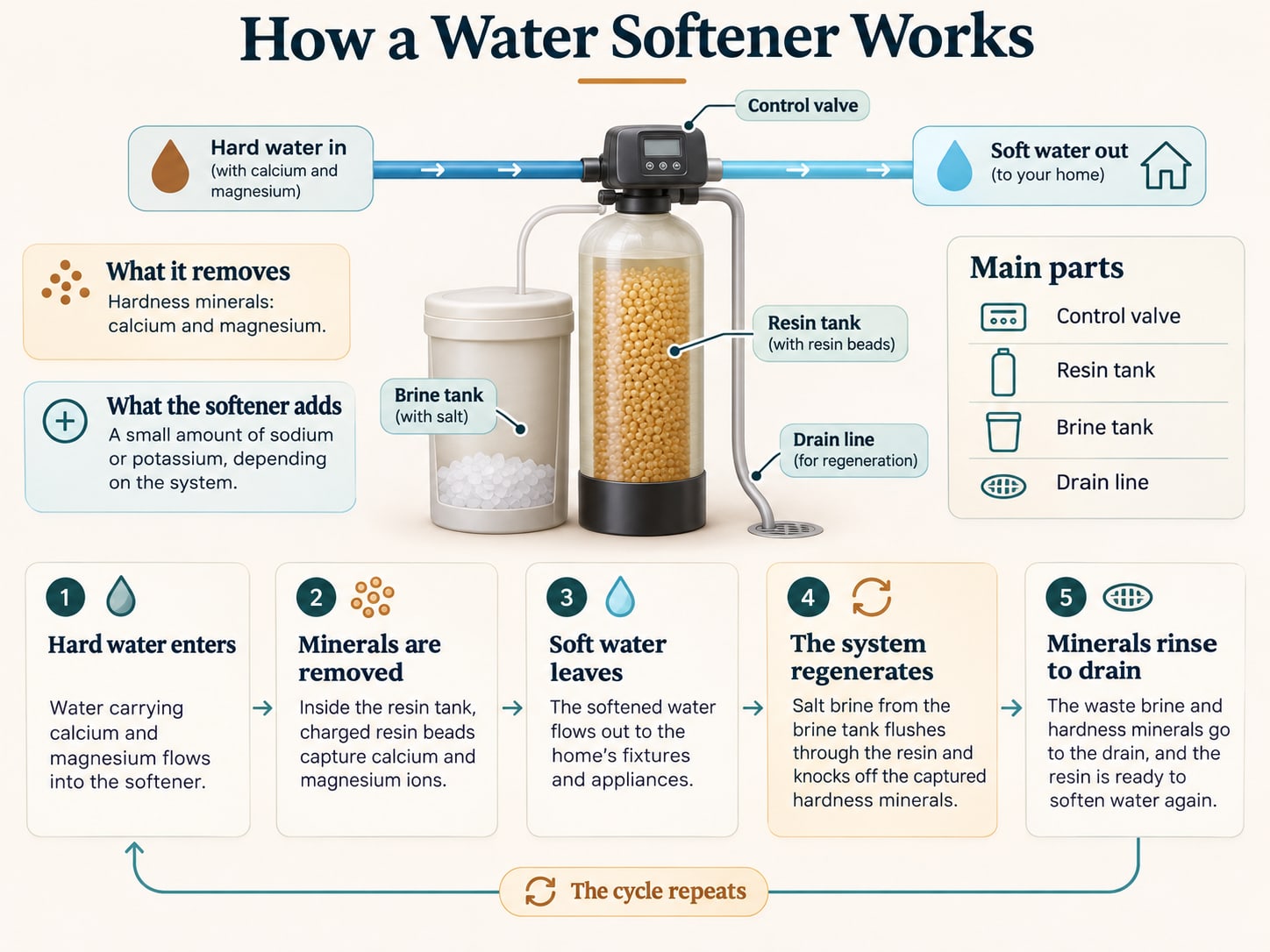
A water softener removes calcium and magnesium by trading them for sodium (or potassium) on a bed of resin beads. Every so often the resin is full and the softener flushes it with salt water to recharge, which is called regenerating. Sizing is about how much hardness your household sends through it between those recharges.
The calculator
The formula
- Daily grains = hardness (gpg) × people × gallons per person per day.
- Capacity needed = daily grains × days between regenerations (we use 7).
- Choose the smallest softener whose rated capacity covers it.
EPA puts average home water use at 82 gallons per person per day. That figure includes outdoor use, so if your hose taps bypass the softener, as they usually should, your real number is lower and the result above leans generous.
Your city’s hardness is on its city page, and choosing your city in the calculator fills it in. Hardness can differ by neighborhood when a utility runs more than one plant, so a home test gives you your own number.
How to measure your own water use
The calculator starts at EPA’s national average of 82 gallons per person per day, which counts lawn watering. Many homes use less indoors, and a measured number gives a closer size. Three ways to get it:
- From your water bill. Most bills show how much you used in the billing period, in gallons or in hundreds of cubic feet (often written CCF or HCF; one is 748 gallons). Divide by the days in the period, then by the people in your home. A winter bill works best, since it leaves out most outdoor watering.
- From your meter. Find it where the main line comes in, usually in a basement, garage or a covered box near the street. Write down the number at the same time two days in a row, or a week apart and divide by seven. The difference is what you used. If the meter reads in cubic feet, multiply by 7.48 for gallons.
- From your utility’s website. Many utilities with newer meters show daily use in your online account.
Divide your daily total by the number of people at home and enter it in the calculator as gallons per person.
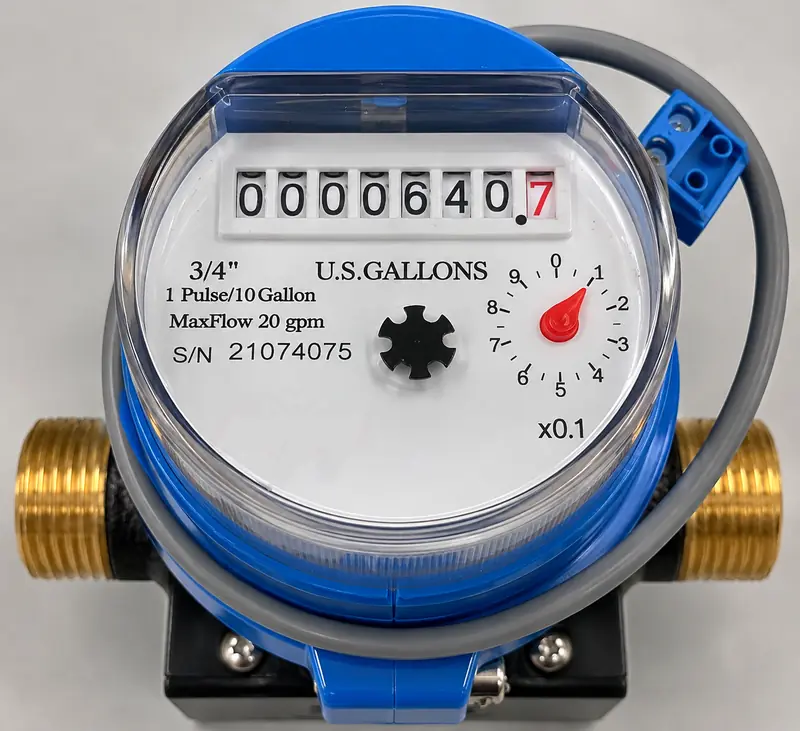
While you’re at the meter, check for leaks: EPA suggests reading it before and after two hours when no water is used. If the number changes, or the flow indicator on the dial turns, something is leaking, and a leak runs through the softener too.
On a private well there’s usually no meter. Start with the calculator’s default, or have a plumber add a meter on the line after the pressure tank. Well water often carries iron too, which uses up softener capacity; our well water filtration guide covers it.
Two things that change the answer
- Iron and manganese use up softener capacity too. If a water test shows either, size up or treat them separately.
- Rated capacity is a maximum. Softeners hit their rated grains only at the highest salt setting; most run more efficiently at a lower setting that delivers less. So if your number lands close to a size, go one size up.
Questions
How do you calculate water softener size?
Hardness (grains per gallon) × people × gallons per person per day gives the grains removed each day. Multiply by the days you want between regenerations, usually about 7, and choose the smallest softener whose rated capacity covers that number.
What size softener does a family of four need?
It depends on hardness. At 10 grains per gallon (gpg) and the U.S. Environmental Protection Agency’s (EPA’s) average of 82 gallons a person, a family of four uses about 3,280 grains a day, or about 23,000 over a week. That’s right at the limit of a 24,000-grain softener, so a 32,000-grain one leaves headroom. At 15 gpg the same family needs about 34,000 grains a week.
Is a bigger softener better?
Only up to a point. An undersized softener regenerates too often and wastes salt and water; an oversized one costs more up front and can regenerate so rarely that the resin sits unused for long stretches.