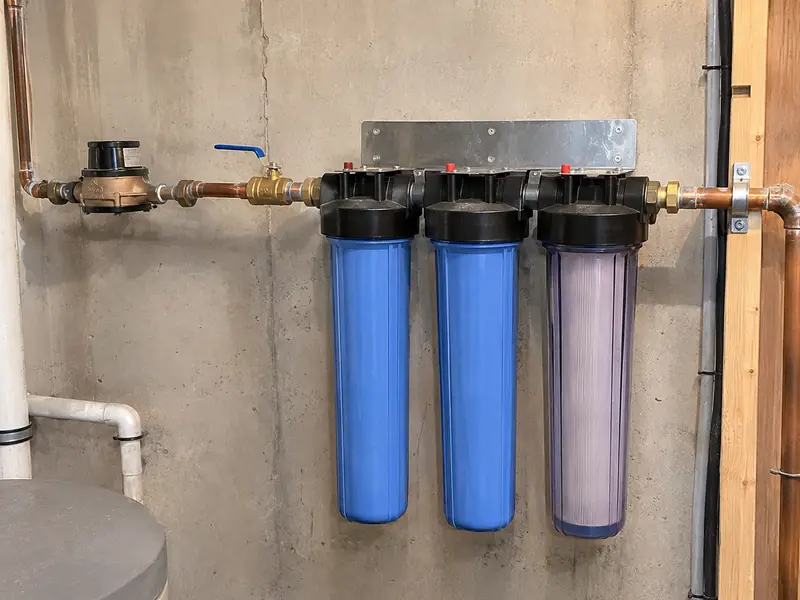
A whole-house filter sits on the main water line where it enters the house, so every tap, shower and appliance gets filtered water. Most are built to take out sediment and the chlorine or chloramine your utility adds, which is what people notice in taste and smell. Some carry certifications for more. The price depends on the kind of system and how you buy it.
What whole-house filters sell for
These are the sellers’ own prices, read on November 4, 2026. Most stores show them as sales against a higher list price, and those come and go.
Whole-house filter prices
Sellers’ own prices, read Nov 2026
- Waterdrop · Whole-house cartridge filter systems$116 to $530
10 systems
- iSpring · WGB31BC 3-stage whole house cartridge system$295
- Kind Water · Whole house water filter$976
- US Water Systems · Bodyguard whole house filter$1,095 to $1,595
10 to 20 gallons per minute
- SoftPro · Chlorine+ whole house carbon filter$1,097
- SpringWell · Whole house water filter system$1,160 to $2,142
by house size
- Culligan · Whole-house filter, bought through a local dealer$1,999 to $5,399
| Brand | Price | System | Store link |
|---|---|---|---|
| Waterdrop | $116 to $530 | Whole-house cartridge filter systems10 systems | Check price |
| iSpring | $295 | WGB31BC 3-stage whole house cartridge system | Check price |
| Kind Water | $976on sale | Whole house water filter | Check price |
| US Water Systems | $1,095 to $1,595on sale | Bodyguard whole house filter10 to 20 gallons per minute | Check price |
| SoftPro | $1,097on sale | Chlorine+ whole house carbon filter | Check price |
| SpringWell | $1,160 to $2,142on sale | Whole house water filter systemby house size | Check price |
| Culligan | $1,999 to $5,399brand’s stated range | Whole-house filter, bought through a local dealer | Brand’s site |
Prices as each seller listed them on November 4, 2026; "on sale" means a discount from a higher list price. We may earn a commission from these links.
Cartridge systems and tank systems
Cartridge systems put two or three canisters in a row on the main line, each with a replaceable cartridge. They have the lowest upfront price, and you replace the cartridges on the schedule the maker sets.
Carbon tank systems use a tall tank of carbon media, often with a sediment prefilter. They cost more upfront, and you replace the media instead of cartridges, again on the maker’s schedule.
That’s why the price range is so wide. Before you compare upfront prices, look up how often each system needs new cartridges or media and what they cost: that’s the running cost, and it can close the gap.
What a whole-house filter removes, and what it doesn’t
- Chlorine and chloramine. The main job of most whole-house carbon filters. Chloramine needs catalytic carbon or a filter certified for chloramine reduction; see chlorine vs. chloramine for which your city uses.
- Sediment. A prefilter catches sand and rust, which also protects the carbon.
- Hardness. Not removed. For that you need a softener, and many homes install both.
- PFAS (“forever chemicals”). Only filters certified for it. The U.S. Environmental Protection Agency’s (EPA’s) limits are built around the water people drink, so a certified filter on the kitchen tap is the lower-cost way to cover drinking and cooking. Our PFAS guide explains the limits and what they mean for your city.
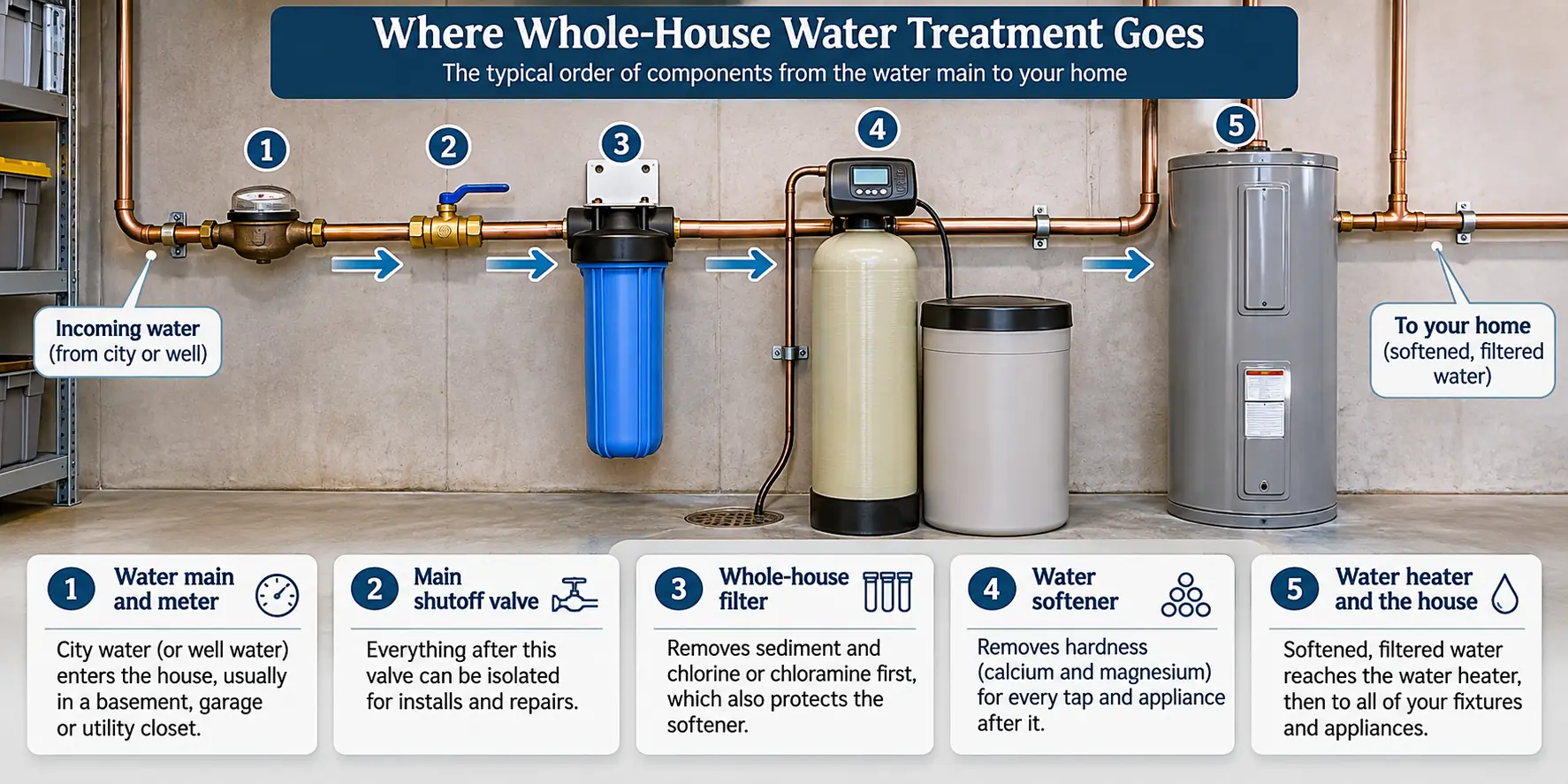
In a home with both, the filter goes on the main line first and the softener after it, since chlorine and chloramine wear out a softener’s resin.
Whole-house filters in certification listings
Whole-house filters with a public listing
From public NSF, WQA and IAPMO listings
- Aquasana · HealthShield whole-house filterPFOA and PFOS listed
WQA: NSF/ANSI 53, 401 · See the listing
- Culligan · Aquasential Whole Home PFAS Filter (indoor/outdoor, Quadra-Hull and fiberglass)PFOA and PFOS listed
WQA: NSF/ANSI 53, 372 · See the listing
- Culligan · Aquasential Smart HE whole-house filters (Cullar and Filtr-Cleer media)
WQA: NSF/ANSI 42, 372 · See the listing
Installation
A whole-house filter goes on the main line the same way a softener does: shut off the water, cut in with a bypass valve, and leave room to change cartridges. Most online brands sell them for do-it-yourself installation; dealers install their own. Our installation guide covers the steps and what each brand says about installing.
We may earn a commission from these links.
Questions
How much does a whole-house water filter cost?
Online stores list them from $116 for basic cartridge systems to $2,142 for large carbon tank systems, and Culligan says its dealer-sold whole-house filters typically cost $1,999 to $5,399. Prices read November 4, 2026.
Does a whole-house filter remove PFAS?
Some are certified to. In the listings we checked, Aquasana’s HealthShield whole-house filter and Culligan’s Aquasential Whole Home PFAS (“forever chemicals”) Filter appear in WQA listings for PFOA and PFOS reduction under NSF/ANSI 53. Many others make no PFAS claim. The U.S. Environmental Protection Agency’s (EPA’s) limits are built around drinking water, so a certified filter on the kitchen tap is the cheaper way to cover what you drink.
Does a whole-house filter soften water?
No. Carbon and sediment filters don’t remove calcium and magnesium. For hardness you need a softener, and many homes install both.
Do I need a special filter for chloramine?
Usually, yes. Ordinary carbon removes chloramine slowly, so look for catalytic carbon or a filter certified to NSF/ANSI 42 for chloramine reduction. 21 of the 40 water systems we cover use chloramine in all or part of their system.